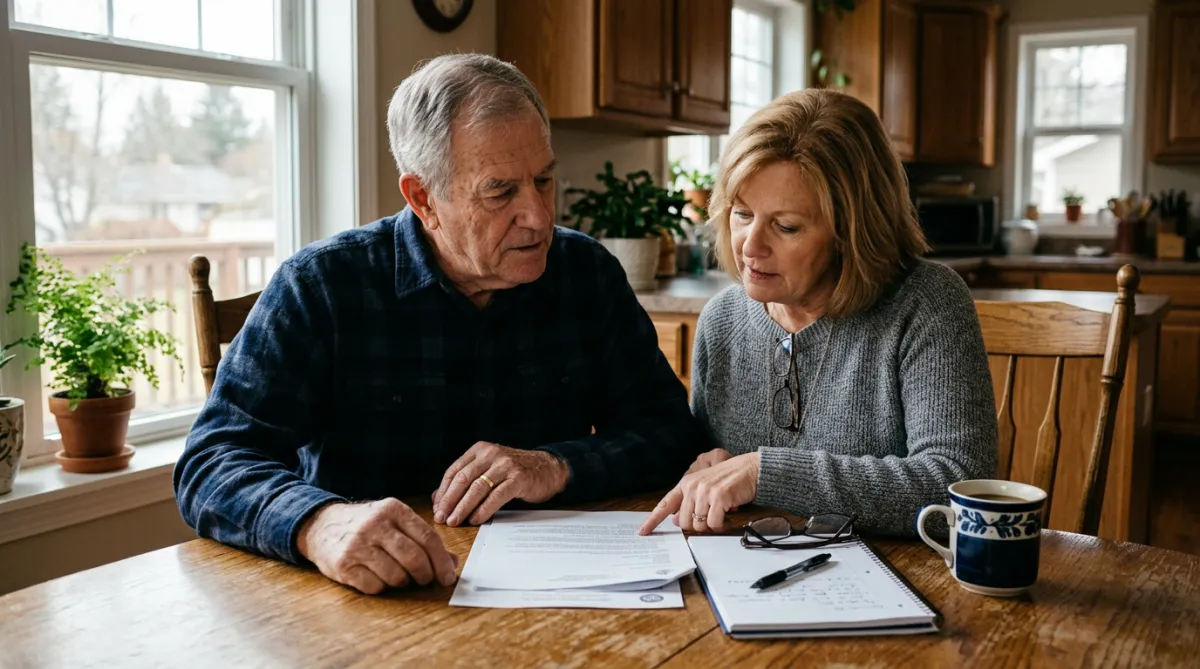
Most veterans I speak with have thought about this stuff. They know where their DD-214 is — or at least they think they do. They have a general idea of what they want to happen when they're gone. They figure their spouse or their kids will figure it out.
But when I ask one simple follow-up question — Does your family know that? — the answer is almost always the same.
No.
That gap between what a veteran knows and what their family understands is something I see constantly. And it doesn't come from not caring. It comes from never sitting down and having the conversation.
Why This Conversation Doesn't Happen
I get it. Nobody wants to talk about worst-case scenarios. Veterans especially tend to be the ones who handle things quietly, who take care of business without making a big deal about it. There's a sense that planning for death or incapacity is somehow negative — like you're inviting something bad to happen by acknowledging it.
But the families left to figure things out on their own don't see it that way. When there's no conversation, no documents, no clear direction — they're left making decisions during the hardest days of their lives without any guidance from the person who mattered most to them.
That's not protection. That's the opposite of it.
What the Conversation Actually Needs to Cover
This doesn't have to be a long, painful discussion. It doesn't have to happen in one sitting. But there are a few things every veteran's family should know — and shouldn't have to guess at.
1. Where the Important Documents Are
Your DD-214 is the most critical document your family will need to access VA burial benefits, coordinate military honors, and confirm your service record. If your spouse or children don't know where it is — or don't even know what it is — that's the first thing to address.
The same goes for your life insurance policies, your will if you have one, any beneficiary designation forms you've filled out, your Social Security card, and account information your family would need to access funds or close accounts.
Your family should not be searching through filing cabinets or going through boxes during the worst week of their lives. They should know exactly where to look — or have a document that tells them.
2. What You Want to Happen
Burial or cremation. Military honors. A specific cemetery or location. Religious preferences. Whether you want a service at all, and what kind.
These are decisions your family will have to make, often within days, if you haven't told them what you want. And in many cases, family members disagree — which turns grief into conflict at the worst possible time.
Your wishes don't have to be written in legal language. They just need to be somewhere your family can find them and clearly understand them.
3. What Benefits Your Family May Be Entitled To
Many military families don't fully understand what the VA provides — and what it doesn't. VA burial benefits for eligible veterans can include a burial allowance, a government headstone or marker, a burial flag, and a Presidential Memorial Certificate. Burial in a national cemetery may also be available.
But those benefits don't cover everything. They don't cover the full cost of a funeral or cremation. They don't cover the gap between what insurance pays and what a family actually needs in the months after a loss.
Your family should understand what's available so they can plan around it — not discover the gaps after the fact when options are limited and emotions are raw.
4. Who Gets What — and Where Those Designations Are
Here's something a lot of veterans don't realize: a will does not control who receives your life insurance, your TSP, or your retirement accounts. Those are controlled by beneficiary designation forms — forms you probably filled out once and haven't looked at since.
If that form is outdated — if it lists an ex-spouse, a parent who has passed, or a name you'd no longer choose — it overrides your will regardless of what it says. The form wins. And your family has no recourse after the fact.
I encourage every veteran to review their beneficiary designations across all accounts and make sure they still reflect the right people. Then tell your family where those accounts are and who is listed.
5. What Coverage You Have — and Where the Gaps Are
Does your spouse know what life insurance you have? Do they know the policy numbers, the coverage amounts, and how to file a claim?
A lot of veterans assume their spouse knows these things. A lot of spouses have never seen the actual policy. When the time comes to file a claim, they're starting from zero — contacting multiple companies, searching for documentation, trying to get answers while they're grieving.
Sit down with your spouse and review your coverage together. Know what you have. Know where it falls short. And if there are gaps — coverage amounts that wouldn't actually sustain your family for long, no plan for final expenses, no cash value to bridge the immediate costs — talk about what addressing those gaps might look like.
The Kit That Makes the Conversation Easier
One of the things I offer through Soldiers Legacy is a free Veteran Will and Burial Kit — and I want to be clear about what it actually does. It's a practical tool designed to help veterans and their families organize the information that matters most, document final wishes clearly, and understand what VA burial benefits are available.
It includes a living will template to document healthcare preferences, a VA burial benefits guide that breaks down what's covered and what isn't, and a final wishes planner to help veterans consolidate account information, their DD-214, and personal messages for their family in one organized place.
It's not a legal document — it's a starting point. Something tangible you can work through together as a family so that the conversation isn't just a passing comment but an actual record your family can reference.
The kit is free for qualifying veterans. There's no obligation. It takes about 30 minutes to review with me, and families consistently tell me that conversation gave them more clarity than they'd had in years.
The Conversation Doesn't Have to Be Heavy
I want to push back on the idea that talking about this stuff has to be a difficult, emotional event. It can be. But it doesn't have to be.
You can start simply. Pull out your important documents and show your spouse where they are. Tell them your wishes in a conversation over coffee. Ask them what questions they have. Write down a few things in a notebook and let your family know where it is.
The point isn't to be morbid. The point is to make sure the people who love you most aren't left scrambling for answers at a time when they should only have to focus on grieving and healing.
Veterans spend their careers preparing for the worst so others don't have to. This is just that — preparation. Except now it's for the people closest to you instead of a mission objective.
Start the Conversation Today
If you don't know where to start, I'm here to help. My goal with Soldiers Legacy is to make this process clear, organized, and manageable — not overwhelming.
Request your free Veteran Will and Burial Kit and schedule a short consultation with me. We'll review what's in the kit, talk through any questions you have, and help you put together a plan your family will actually be able to use.
The conversation your family needs is one you can start right now. Don't wait for the right moment. The right moment is whenever you choose to make it one.
Request your free Veteran Will and Burial Kit at soldierslegacy.com/veteran-will-kit.
This information is educational and is not legal or financial advice. Coverage, availability, and eligibility for VA benefits are subject to applicable terms and individual circumstances. For official VA benefit determinations, consult the U.S. Department of Veterans Affairs or an accredited veterans service representative.